
When a game server, work VPN, remote desktop app, or website needs to find your network, it does not use the private address shown in your device settings. It uses the address reported by a public IP address checker: the internet-facing IP assigned to your connection. That result is useful for more than curiosity. It can confirm whether your ISP changed your address, help you configure remote access, explain why port forwarding is failing, and give you a starting point for investigating connection problems. The key is knowing what the result means, what it does not mean, and which diagnostic
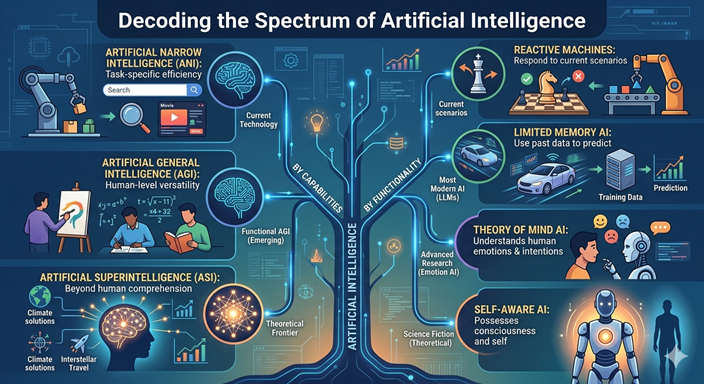
1. Classification by Capabilities This framework looks at the “intelligence ceiling” of a system—how close it is to (or how far it exceeds) human cognition. Artificial Narrow Intelligence (ANI) Also known as Weak AI, this is the AI we live with today. It is designed to perform a specific task—like facial recognition, translating a language, or recommending a movie—with superhuman efficiency, but it cannot perform outside its programmed scope. Use Cases: Virtual assistants (Siri, Alexa), recommendation engines (Netflix, Amazon), and autonomous drones. Current State: Fully mature and ubiquitous in 2026. Artificial General Intelligence (AGI) Often called Strong AI, AGI is
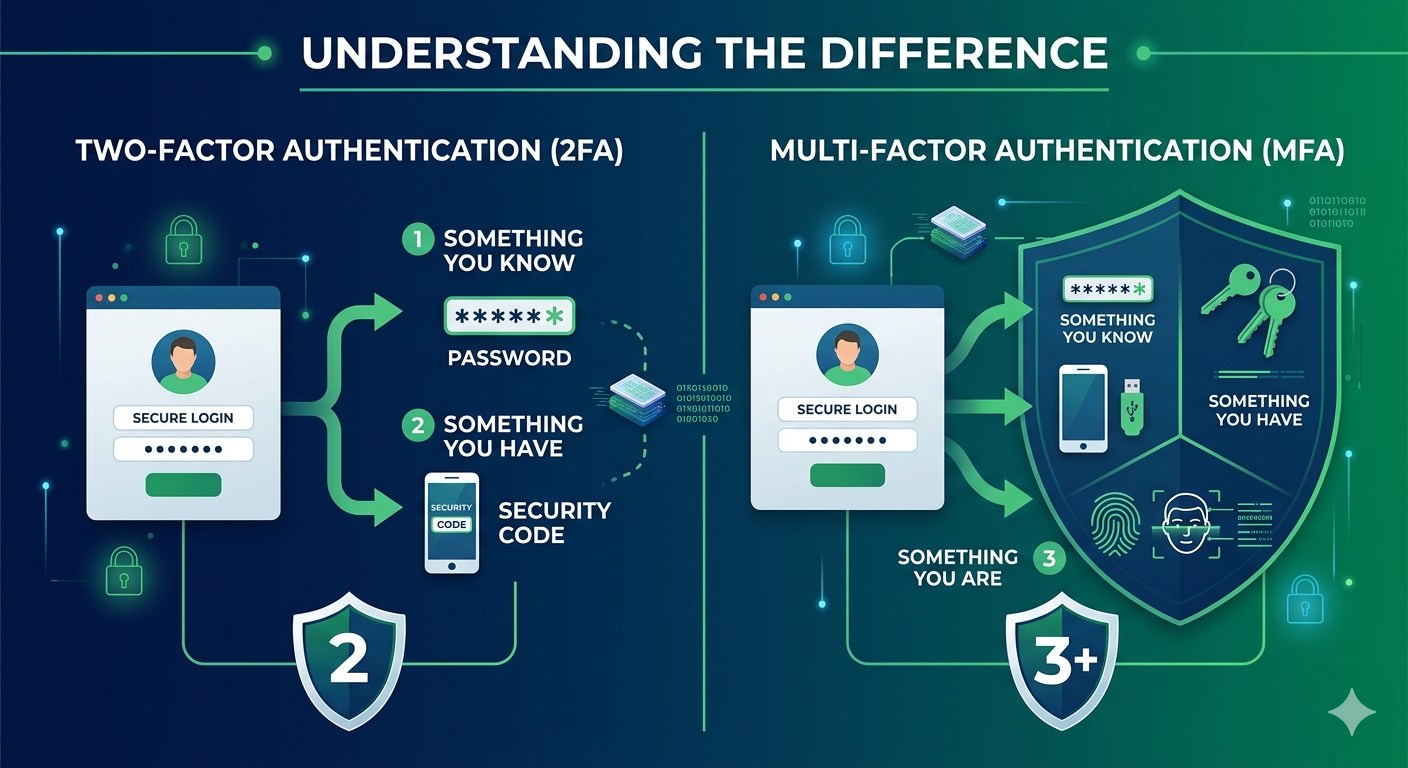
1. Two-Factor Authentication (2FA) 2FA is the most common form of extra security. It requires exactly two different methods of identity verification before granting access to an account. Typically, this involves: Something you know: A password or PIN. Something you have: A code sent to your phone, an authentication app, or a physical security key. The goal of 2FA is to ensure that even if a hacker steals your password, they still can’t get into your account without that second, physical “factor.” 2. Multi-Factor Authentication (MFA) MFA is the broader umbrella term. It refers to any security system that requires
Cipher suites are sets of cryptographic algorithms used in SSL/TLS protocols to secure network connections. They determine the encryption, authentication, and integrity protection mechanisms that will be used during communication between a client and a server. Here’s an overview of the components typically included in a cipher suite: Key Exchange Algorithm: This determines how the client and server will securely exchange cryptographic keys. Common key exchange algorithms include Diffie-Hellman (DH), Elliptic Curve Diffie-Hellman (ECDH), and RSA. Authentication Algorithm: This verifies the identity of the communicating parties. Popular authentication algorithms include RSA (Rivest-Shamir-Adleman), DSA (Digital Signature Algorithm), and ECDSA (Elliptic Curve
Getting hacked is no fun. You feel violated, and it can be a huge hassle to recover and protect your accounts. The good news is there are usually signs that indicate your accounts have been compromised. Being aware of these signs allows you to act quickly to secure your data and minimize damage. In this post, I’ll go over the top signs that you may have been hacked. Strange activity in your email A common indicator of a hack is unusual activity in your email account. Here are some specific things to look out for: Emails being sent from your